/
feb 16, 2025
Web Design vs Website Templates: What Actually Gets More Leads?
From Pages to Performance: How Websites Turn Visitors Into Leads
/
AUTHOR

Jordan Torrance
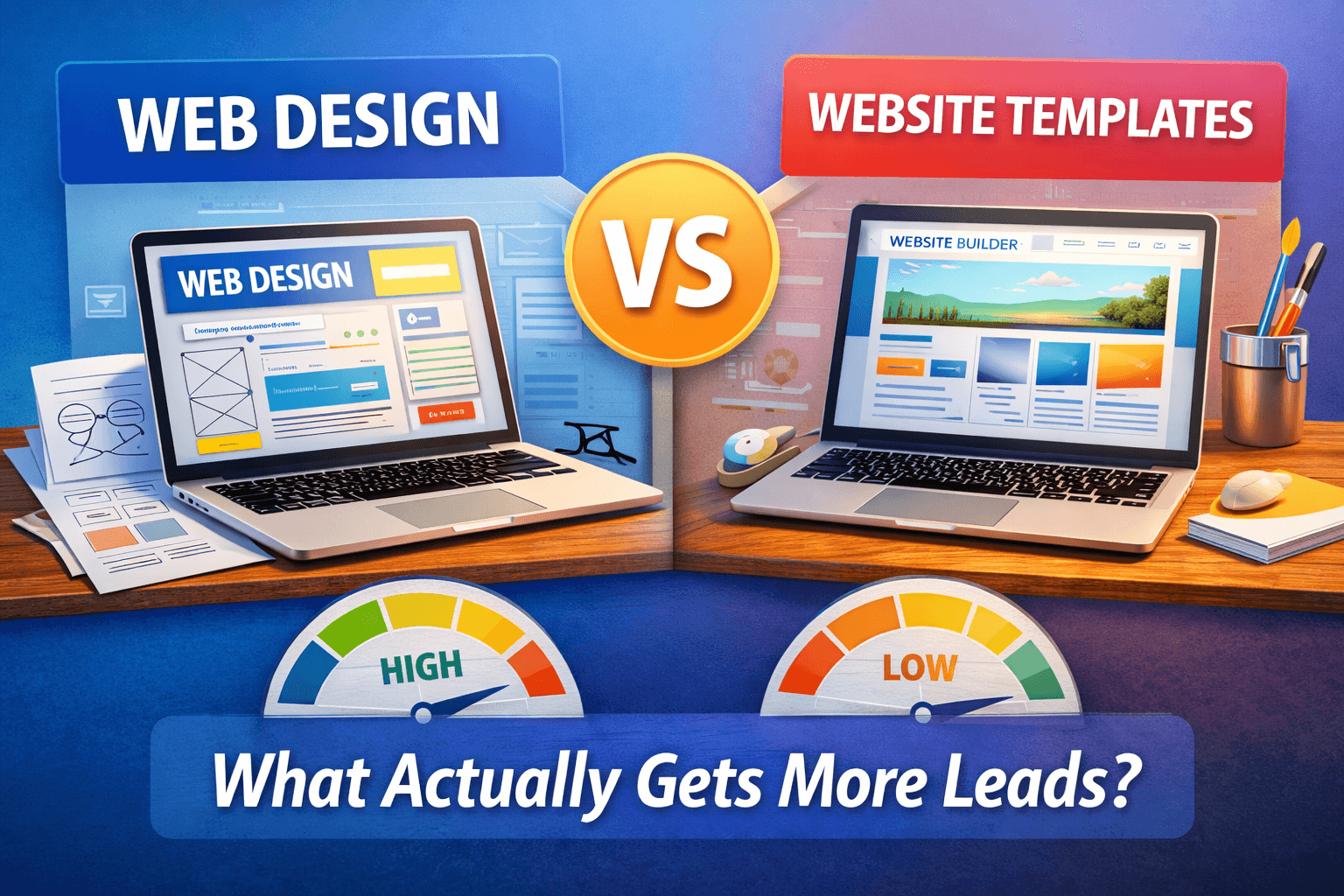
Website templates are everywhere.
They’re cheap, fast, and promise a “professional website” in a few clicks. For many businesses, that sounds perfect.
But here’s the real question most people don’t ask:
Do website templates actually generate leads — or just look good online?
Just like data is useless without decisions, a website is useless if it doesn’t convert visitors into customers.
This guide breaks down the real difference between custom web design and website templates, and which option actually delivers business results.
From Pages to Performance: How Websites Turn Visitors Into Leads
A website’s job isn’t to exist.
It’s to guide visitors toward action.
High-performing websites follow a process — not a shortcut.
Here’s what that process looks like.
1. Strategy vs Shortcuts
Website templates are designed to work for everyone — which means they’re built for no one in particular.
Custom web design starts with:
Your business model
Your target customer
Your services
Your conversion goals
Templates skip this entirely, which is why they often fail to convert.
2. Structure & User Flow
Templates use generic layouts:
Hero section
Feature blocks
Stock testimonials
Generic calls-to-action
Custom web design builds:
Intent-driven page flow
Clear service hierarchy
Strategic call placement
Reduced friction to enquiry
Visitors don’t just browse — they’re guided.
3. Design That Supports Trust
Templates look professional — but often feel generic.
Custom design focuses on:
Brand credibility
Visual hierarchy
Local or industry trust signals
Clarity over decoration
People don’t convert when a site looks “nice”.
They convert when it feels trustworthy and clear.
4. SEO & Performance Differences
Templates often struggle with:
Bloated code
Poor page speed
Limited SEO flexibility
Rigid structures
Custom web design allows:
SEO-first architecture
Faster load times
Clean heading structures
Better crawlability
If organic traffic matters, this difference compounds over time.
5. Conversion Optimisation
Templates assume visitors behave the same way across all industries.
Custom web design adapts to:
Your customer’s decision process
Your sales cycle
Your services
Your pricing model
Small changes in layout and copy can dramatically increase enquiry rates — something templates can’t adapt to easily.
6. Scalability & Long-Term Value
Templates work until:
You need more pages
You want better SEO
You add new services
You want to optimise conversions
At that point, most businesses rebuild.
Custom web design is built to evolve — not be replaced.
When Website Templates Make Sense
Templates can work if:
You’re testing an idea
You don’t rely on online leads
The website isn’t business-critical
They’re a starting point — not a growth strategy.
When Custom Web Design Wins
Custom web design consistently outperforms templates when:
Leads matter
SEO matters
Trust matters
Your website is part of your sales system
If your website is a key driver of revenue, design quality directly impacts results.
Choosing the Right Option for Your Business
Ask yourself:
Do I want something online, or something that converts?
Is my website supporting my sales process?
Am I relying on traffic turning into enquiries?
If the answer is yes, custom web design isn’t an upgrade — it’s a necessity.
Web Design Built to Generate Leads
We design websites that:
Convert visitors into enquiries
Support SEO growth
Scale with your business
Focus on clarity, trust, and performance
If you want a website built for results — not just appearance — learn more here:
Or get in touch for a straightforward conversation.
/
BLOG